Tag Archives: opinion

You Accidentally Broke a Law which You didn’t Know was a Law. What happens?

[ by Justin Schwartz ]

It actually normally doesn’t much matter whether you know the law to whether you broke it or not. The usual maxim is “ignorance of the law is no excuse.” That is generally if not universally true. To break a law, what you have to do is to satisfy the elements of the offense or wrong.

For example, murder is usually defined as intentionally killing someone without lawful justification. If you killed someone, and you meant to do it, and you didn’t have lawful justification (e.g. self defense) then you have satisfied the elements of murder, and committed the crime. It is not a defense to say, I didn’t know that was against the law.

There are a number of narrow exceptions. The law itself may say that ignorance is a defense. Some tax law is presumed to be so complicated and hard to understand that if you got advice from an expert such as a tax lawyer or a certified accountant, and that advice was wrong, so that you made false statements on your tax returns, thinking that they were correct because of the incorrect expert advice, that is a defense to some violations of the tax code.

Similarly, some laws involve a bad mental state called willfulness, Which is different from knowledge – knowing that you are doing the thing the law forbids, whether or not you know the law forbids it; or intent – intending to do the thing the law for bids, again whether or not you know the law forbids it.

With willfulness, as it is usually understood, you don’t have to know that there actually is a law, or what it says, but that kind of thing that you did was bad enough that you should have known that there would be a law against it.

However, here ignorance is not a defense, because it is presumed that a reasonable person would have known that there was some law against it, and you are presumed to be a reasonable person, or anyway held to that standard.

The long and short of it is that normally you do not have to know that what you were doing is illegal for it to be illegal. You just have to do the thing that is forwith the appropriately bad state of mind.

And in some cases, strict liability offenses like speeding, you don’t even need to have a bad state of mind. All you have to do is do the thing that is forbidden. And of course you do not have to know that it is forbidden.

Since the laws are complex, often obscure, not necessarily consistent, and not just what you would read in a statute book, but also are understood as they are interpreted by the courts in your jurisdiction, and in many cases people don’t even know what jurisdiction they are in, or as they are interpreted by the agencies that make rules with the force of law and interpret The regulations that they administer and sometimes create, like the statutes, are written in a kind of code language with special meanings attached to words that ordinary people would not necessarily know. That’s for example,The word “reasonable” usually invokes and objective standard independently of whatever a person might actually think.

These kinds of things can lead to unfairness, but in some ways it is hard to see how that could be avoided without sending everybody through three years or anyway several years of law school, and giving them the resources they need to find and interpret the law. That is why in encounters with the law, it is highly advisable to have a licensed attorney who has that sort of training to help you out. And if you think you might be encountering the law, to consult an attorney before hand about what you’re doing and what the law requires. That is why businesses of any size have legal departments or general counsels to give him that sort of advice. Most citizens of course cannot afford to consult a lawyer even on important matters and therefore are just out of luck.

Justin Schwartz is a lawyer working at Law Office of Justin Schwartz. He is an ex-law professor, ex-philosophy professor, ex-Biglaw, independent scholar and idiosyncratic leftist.

COVID-19: Looking Beyond Security Rhetoric to Protect Communities

[ by Sally Tyler ]

In separate corners of the globe, and at the same time, protests in the United States sparked by the killing of George Floyd by police turned violent, and the Tiananmen Square vigil in Hong Kong was banned for the first time in 30 years.

It is no coincidence that these events come as the world is grappling with the COVID-19 pandemic, and that official government rhetoric responding to unrest everywhere has been couched in terms of safety and security.

Threats to individual safety come in a variety of forms – the virus, food insecurity, a knee to the neck, or a lone tank. The discerning public should look beyond a superficial concept of public safety, and analyse to what extent the global health emergency is being used to deflect attention from long-standing societal injustice, and how it may be used to justify power grabs aimed at squelching democracy.

For instance, curfews have been imposed in 40 American cities, with more than 5,000 National Guard members deployed in response to protests. Many urban areas resemble fortresses, without even creating an increased sense of security for the people who live there.

At a time when a fractured nation needs leaders to listen more than pontificate, President Trump tweeted ominously, saying ‘when the looting starts, the shooting starts’, a dog whistle to the country’s segregationist past. Such comments were reminiscent of the Philippines’ President Rodrigo Duterte, who instructed the police and military to shoot dead any violators of his coronavirus lockdown laws in Manila.

President Trump followed this up by threatening the unprecedented use of military power against the American people, and then, apparently frustrated by the protests around the nation, attempted to bully governors into using force in their states by calling them weak.

In both the Trump and Duterte cases, leaders made threats against their own citizens under the guise of keeping them safe.

United States police and state officials have mostly acknowledged the right to protest and made small numbers of arrests, at least relative to the overall number of protesters. But in Minneapolis, the site of Floyd’s killing and origin of this wave of protests, officials repeatedly claimed that the violence was the work of ‘outside agitators’.

Although there is some indication that white supremacists posted on social media posing as antifa activists to urge turnout and deflect the responsibility for violence, evidence from arrests does not bear out the claim that the violence was solely the work of outsiders, as 47 out of 57 arrests on the first night of Minnesota protests lived in the state.

It is certainly not true that large numbers of people want to see businesses in their own communities destroyed, but it is misleading and simplistic to say that no local actors have been involved. Historically, the blanket charge of outside agitation has been used to mask real issues of dissent, and policymakers and the public should be critical of these claims, particularly if they are used to minimise the underlying issues creating unrest.

Individuals who participate in damaging their own communities know the costs, but are attempting to call public attention to their peril with drastic action. Inequalities made manifest when health inequities fueled by systemic racism make some more vulnerable to the coronavirus than others, and a society in which officers sworn to protect people seem intent on killing them, will drive people to great lengths to demand change. These people are screaming to the world that they are not safe.

Yet, the paternalistic response by some officials has been to urge ‘good people’ to stay home from protests, and others fret publicly that protests may lead to new coronavirus outbreaks. Certainly, there is opportunity for virus transmission, but officials may miss the point that – for those whose existence is threatened on an ongoing basis – safety is relative.

Meanwhile, the need to enforce social distancing measures was cited as the rationale in Hong Kong for banning the annual 4 June remembrance of those who died in the Tiannamen Square uprising. Coming on the heels of China’s security order reining in Hong Kong’s autonomy, it seems apparent that the decision is more about protecting citizens from democratic reform than from the virus.

The United States, United Kingdom, Canada and Australia issued a joint statement of condemnation against China’s new security law, but have so far stopped short of sanctions against China.

So now the world waits for China’s next move in Hong Kong, and the walls appear to be closing in on pro-democracy protesters there. They have shown themselves to be nimble and resolute, and so may continue, but no one could legitimately argue that the new security measure makes them safer.

Keeping citizens safe is a central governmental responsibility, and in a public health emergency, this responsibility may entail infringing on essential liberties. If a government issues stay-at-home orders, it is obliged to ensure that people possess the fundamental security they need to comply with that order.

In many parts of the world, including the United States, daily labour is required by many simply to make ends meet. The pandemic only magnifies the stark reality of those who literally cannot afford to help keep their community safe, regardless of their intent.

Though originally blind to the needs and realities of its migrant workforce, Singapore is an example of responsive policy-making. It quickly absorbed that lesson when migrant dormitories became epicenters for outbreaks. Then, to its credit, the government responded by creating teams to supply these dormitories with food, medical care, internet communication, and entertainment so that they could remain at home and actively help contain the virus.

Throughout the COVID-19 crisis, the phrase ‘stay safe’ has become a mantra in some quarters – newscasters use it to sign off from broadcasts, and some use the phrase to close emails to friends. But those words will remain hollow until everyone comes to terms with who is safe in our society and who is not, even if it means acknowledging that some in our midst are not even safe from their own government.

Sally Tyler is an attorney and policy analyst, based in Washington, DC. She holds degrees from Emory University, and from Harvard’s Kennedy School of Government.

Surveillance to Limit Spread of COVID-19 Raises Concerns for Privacy of the Australians

[ by Fan Yang ]

In February 2020, to recover its economy from the coronavirus outbreak, China’s State Council in collaboration with two tech giants, Tencent and Alibaba, launched the ‘health code’ mini-programme on WeChat, a social media platform, and Alipay, a financial platform.

The health code is an automatic built-in function on both platforms, leaving users incapable of choosing whether to install the function or deactivate it. This function is so far only accessible to users based in mainland China.

According to WeChat and Alipay, an assessment is made in accordance with the data drawn from government sectors including healthcare, telecommunication, transportation, migration, and customs, and this informs a person’s health rating. This is used to speculate the likelihood of whether a user poses a contagion risk, based on their travel history, medical information, and whether they have recently contacted someone who is a possible COVID-19 carrier.

This health code is presented as a more complicated version of QR code that is only scannable by authorities in order to protect user’s privacy. For users and business owners, it performs like a digital ‘proximity card’, with which users are permitted to enter a location or travel within or outside a province, based on the information in their code. Mobilities will be restricted for those who fail to install the health code.

To get their health code, users are required to let the government access their basic information on WeChat and register with their national identification number.

On Alipay, health codes are colour-coded green, yellow, or red. With green health codes, users are granted with freedom of movement, whereas yellow and red indicate that one needs to go into mandatory quarantine, either by themselves or in a supervised quarantine facility.

Concerns have been expressed in relation to the lack of transparency, as the health code is a computer system, and whether future collaboration with the social credit system, which is designed to give the government control based on social sorting and classification, restricting certain groups of people according to their race, ethnicity, or their history of political activism.

Health code functions on Alipay and WeChat are also reported to send users incorrect information: some users were instructed to conduct isolation without knowing why, and some users have even received different instructions from the two platforms.

Drawing experience from Singapore’s TraceTogetherAustralia’s coronavirus contact tracing app emerged out of controversy in April. To make sure that the application functions properly, users are required to consent to carry the phone with them when they leave home and keep the application functioning with Bluetooth activated.

The idea of the government potentially monitoring every aspect of life has drawn much suspicion. Australians started questioning: Should I give up privacy for freedom this time? How much freedom are we ready to give up in fighting an existential threat, be it a virus, terrorism, or crime more generally? And during a national crisis, is privacy still personal property?

Unlike China’s health code, downloading COVIDSafe is entirely voluntary for Australians. However, these personal choices have also been turned into a subject of moral judgement, in particular on social media. Many argue that going out without installing COVIDSafe is putting the lives of others at risk.

The public is under many layers of surveillance networks administered by technological corporates and national governments. It is certainly paradoxical to see so many express concerns about coronavirus tracking apps on Facebook, a platform with a poor history on privacy protections. However, these concerns are fair and real. Sharing personal data with the authorities further erodes the thin line between individuals and the state, and between the private and the public.

A  variety of surveillance technologies are being implemented across countries in Europe, Latin America, and Asia, with the aim of controlling the virus. Despite their limited utility during the lockdown, they could prove to be much more appealing when restrictions are gradually lifted.

Surveillance is two-sided especially during this challenging time, and perhaps relaxing personal privacy rules can be justifiable at this stage.

The benefits of correct identification, screening, checking, appropriate classification, and other tasks associated with monitoring and surveillance must be acknowledged, despite the cost to privacy they represent.

Risks and dangers are always manifested in large-scale systems and power does corrupt – or, at least, skews the vision of – those who wield it. The pandemic has raised the serious question of how much faith Australians have in their government, especially in processing data ethically and securely, ones which will continue to be significant long after the pandemic is over.

Fan Yang is a PhD candidate at School of Communication and Creative Arts, Deakin University. She researches the effects of large-scale international social media platforms in terms of cross-jurisdictional tensions and expectations, and their cross-border effects on political activity and identity. Her research also includes the globalisation of non-Western technologies and social media platforms, smart cities and surveillance and information privacy.

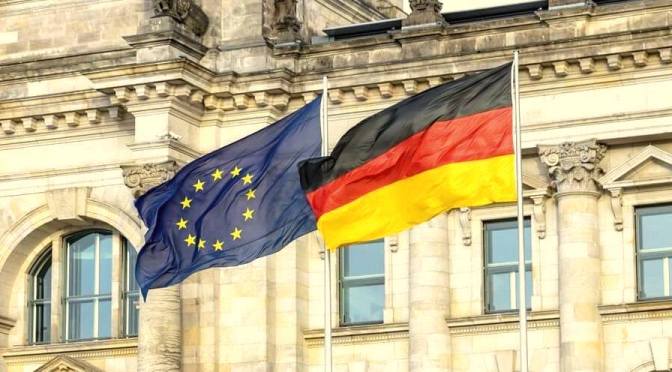
German Court Attacks the Primacy of EU Law. Sets a Wrong Precedent.

[ by John Bruton ]

The Federal Constitutional Court (FCC) of Germany this week attacked one of the fundaments of the European Union, the primacy of Union law.  It is long settled practice that, in its field of operation, EU law has superiority over national law.

The FCC of Germany has also rejected the primacy of decisions of the European Court of Justice (ECJ), over decisions of national courts, on the meaning of EU Treaties.

The FCC has furthermore attacked the independence from the politics of any one country, of the European Central Bank (ECB).  It instructed the German Bundestag and  the German government to ensure that the ECB did a new analysis of its bond buying programme in light of the principles it laid down. Failing that, the ECB bond buying in question should not be applied in Germany, it said.

This is wrong. It is not the prerogative of any one EU country to instruct the ECB!

I remember how, at the Dublin EU Summit of 1996 which I chaired, Helmut Kohl defended the independence of the soon to be created European Central Bank. He did not want member states to be able to pressurize it to pursue loose monetary policies.

Now, A German Court wants a German government to interfere with the independence of the ECB, something that would have horrified Helmut Kohl.

The decision that  the German FCC announced this week was about the bond purchasing programme of the European Central Bank instituted by Mario Draghi to support the Euro in the wake of the 2008/10 economic crisis.  This bond buying programme was known as the PSPP.

The ECJ had found this PSPP programme to be legal under the EU Treaties, in a decision on 11 December 2018. The German Court this week flatly rejected this ECJ decision. It described it  as “untenable”.

It condemned it in the following terms:

“In its Judgment of 11 December 2018, the ECJ  held that the Decision of the ECB Governing Council on the PSPP and its subsequent amendments were still within the ambit of the ECB’s competences.

This view manifestly fails to give consideration to the importance and scope of the principle of proportionality (Art. 5(1) second sentence and Art. 5(4) TEU) – which applies to the division of competences between the European Union and the Member States – and is simply untenable from a methodological perspective given that it completely disregards the actual economic policy effects of the programme”

The German Court added that the PSPP bond buying programme of the ECB is “ultra vires (beyond its powers) and not to be applied in Germany” and instructed the German authorities to this effect.

It even criticised the methodology of the ECJ in reaching its decisions. A remark designed to annoy.

The EU can only work if its laws are interpreted consistently in all 27 EU member states. If a German Supreme Court can overrule the ECJ interpretation of the EU Treaties, so also could the Hungarian Supreme Court or the Polish Supreme Court.

Soon we could  have 27 different interpretations of what EU law meant, and the EU Single Market would  quickly disappear!

The German Court did say that it was not making a decision about the more recent bond buying programme, introduced in the wake of the COVID-19 outbreak, and which is supporting countries like Italy and Spain, hardest hit by COVID-19.

But the logic of the German FCC’s  decision this week clearly implies that it would also find against that programme too when, as is likely, the same German litigants bring a case against the new programme before the German courts.

A major showdown is now inevitable, at a time of maximum vulnerability for the European economy.

A robust answer must be given by the EU institutions to the German Court.

The Inter governmental Conference, including the then German government, that finalised the Lisbon Treaty in 2007 said, when it promulgated that Treaty:

“In accordance with the well settled case law of the EU Court of Justice, the Treaties and the law adopted by the Union on the basis of the Treaties, have primacy over the laws of Member States, under the conditions laid down by the said case law”.

The European Heads of Government, including Angela Merkel, must urgently reaffirm that declaration, and declare their unequivocal support for the ECJ decision of December 2018, and for the independence of the ECB from the authorities of Germany, and from those of  any other EU state.

By undermining the ECJ, the German Court is providing a precedent that could be used by semi authoritarian governments in some EU states, who do not like some EU decisions on matters like the rule of law , academic freedom, or media pluralism.

To be fair, the doctrine underlying the German Basic Law is one which has democracy, and respect for democratic procedures, at its centre. The German Federal Constitutional Court has frequently defended the democratic prerogatives of the German Federal State.

It has, however, failed adequately to recognise that the EU is a democracy too.

It has an elected Parliament, to which the ECB accounts for itself.

That is where German concerns should be pursued, by political means, and not by mischief making court cases, decided by judges who set themselves above the European Union.

Originally published on Oped Column Syndication.

John Bruton was the Prime Minister of the Republic of Ireland (1994-97) and the European Union’s Ambassador to the United States (2004-09). He had held several important offices in Irish government, including Minister for Finance, Minister for Industry & Energy, and Minister for Trade, Commerce & Tourism.